



cub scouts at njaa
A First Look at the Universe
There is something unforgettable about seeing the Moon's craters, the rings of Saturn, or a bright planet through a telescope for the first time.
The New Jersey Astronomical Association welcomes Cub Scout packs and dens to visit the observatory and discover the night sky with us. Our astronomers enjoy introducing young Scouts to the Sun, Moon, planets, stars, constellations, telescopes, and the wonders of the universe in an engaging, age-appropriate way.
Our goal is simple: encourage curiosity, answer questions, and give young Scouts an opportunity to experience astronomy for themselves.
NJAA serves as your host and astronomy resource. Cub Scout leaders remain responsible for their Scouts and for determining how activities during an NJAA visit relate to their particular rank, adventure, or Scouting requirements.
What Can Cub Scouts Experience at NJAA?
Every visit can be a little different. What we can see depends upon the season, time of night, weather, Moon phase, and what happens to be in the sky.
During a visit, Cub Scouts may have an opportunity to:
-
Look through a real astronomical telescope.
-
See craters, mountains, and other features on the Moon.
-
Observe a planet when one is visible.
-
Find bright stars and recognize simple constellations.
-
Learn how to find north using the night sky.
-
Discover why stars have different colors.
-
Learn the difference between a star and a planet.
-
See how a telescope works.
-
Compare different types of telescopes.
-
Learn why astronomers use red lights at night.
-
Discover why dark skies are important.
-
Ask our astronomers questions about space and astronomy.
-
Tour the observatory and see some of the equipment astronomers use.
Questions are encouraged!
If a Cub Scout has ever wondered “How far away is that star?”, “Why does the Moon change shape?” or “Is there life somewhere else?”—bring those questions along.
When Does the Night Sky Begin?
Sunset Doesn't Mean Dark
When the Sun sets, the sky doesn't become dark immediately. The period between sunset and darkness is called twilight.
Sunset
The Sun has disappeared below the horizon, but the sky is still quite bright.
Civil Twilight
The sky begins getting darker and some of the brightest objects may start appearing.
Nautical Twilight
More stars become visible as the sky continues to darken.
Astronomical Twilight
The last glow of sunlight is disappearing.
Astronomical Darkness
The sky has become fully dark and many more stars and faint astronomical objects can be seen.
Why does this matter when planning a Cub Scout visit?
If sunset is at 7:30 PM, for example, good nighttime observing does not necessarily begin at 7:30 PM.
Our NJAA Scout Liaison can help leaders select a visit time appropriate for the season and the type of observing your group hopes to experience.
The Moon Can Be Our Friend
The Moon Through a Telescope
The Moon is an excellent object for young astronomers. Through a telescope, Scouts may be able to see:
-
Craters
-
Mountains
-
Dark lunar plains called maria
-
Shadows along the boundary between lunar day and night
-
Details that cannot easily be seen with the unaided eye
A full Moon can brighten the sky and make faint galaxies and nebulae more difficult to see, but for a Cub Scout's first astronomical experience, the Moon itself can provide a spectacular introduction to observing.
What Will We See?
The Sky Changes Every Night
Unlike a museum exhibit, we can't simply turn on the objects we want to see.
The Moon moves. Planets change position. Constellations change with the seasons. Some objects rise late at night, while others may have already set before your visit begins.
That is part of what makes astronomy exciting.
Depending upon the date and time of your visit, NJAA astronomers will select interesting objects that are visible that evening.
We cannot guarantee that a particular planet, star, constellation, or other celestial object will be visible during your visit.
What If It's Cloudy?
I'd make this particularly reassuring for Cub Scout leaders.
Clouds Don't Have to End the Adventure
Astronomy depends upon the weather, and unfortunately even astronomers can't control the clouds!
Clouds, haze, humidity, precipitation, wind, smoke, and other conditions can prevent or limit telescope observing.
If observing isn't possible, NJAA may still be able to host your group indoors. Depending upon the planned program and availability of our volunteers, Scouts can tour the facility, see astronomical equipment, learn how telescopes work, discuss the Solar System and universe, and—most importantly—ask questions of our astronomers.
A cloudy night can still be an astronomy night.
Daytime Astronomy
I would definitely include this because it opens another avenue for Cub Scout programming.
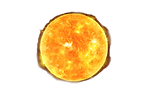
Our Nearest Star — The Sun
Astronomy doesn't only happen at night.
When appropriate programs are scheduled, NJAA can introduce Scouts to our nearest star—the Sun—and demonstrate how astronomers safely study it.
An Important Rule Every Young Astronomer Should Know
Never look directly at the Sun.
Never look at the Sun through binoculars, a telescope, finder scope, camera, or other optical device unless appropriate equipment specifically designed for safe solar observing is being used under knowledgeable supervision.
During NJAA solar observing activities, Scouts should always follow the instructions of the NJAA astronomer operating the equipment.
Getting Ready for Your Visit
Cub Scout Astronomy Checklist
Scout Leaders — before arriving:
☐ Confirm your date and arrival time with the NJAA Scout Liaison
☐ Check the expected weather
☐ Check the expected temperature after sunset
☐ Encourage Scouts to dress appropriately
☐ Have Scouts bring questions about astronomy
☐ Let NJAA know what your group is currently learning
☐ Tell us about any particular astronomy activities you hope to explore
☐ Let us know about relevant accessibility accommodations in advance
☐ Prepare Scouts for appropriate behavior around telescopes and equipment
Cub Scouts may want to bring:
☐ A jacket or sweatshirt
☐ Comfortable closed-toe shoes
☐ A notebook and pencil
☐ Binoculars, if they have them
☐ A red flashlight, if available
☐ Their curiosity!
And perhaps most importantly:
Bring your questions. There are no "silly" astronomy questions at NJAA.
A Special Note About Flashlights
Astronomers Like the Dark!
It takes time for our eyes to become accustomed to darkness. A bright flashlight or phone screen can quickly interfere with that night vision.
While observing, we ask visitors to avoid bright white flashlights and unnecessary phone screens.
Red flashlights are preferred around the observing area.
This is also a nice opportunity for an NJAA member to explain why astronomers use red light.
Scout Leaders — We're Here to Support You
NJAA wants to be a resource for your Pack or Den.
Our role is to provide the astronomical environment, equipment, knowledge, and volunteers that can make your visit special. Cub Scout leaders remain responsible for supervision of their Scouts and for determining whether activities satisfy their Scouting program or advancement requirements.
When requesting a visit, tell our NJAA Scout Liaison what you would like your Scouts to experience.
We can then determine how NJAA may best support your visit.
Help Us Plan Your Visit
I'd use essentially the same form concept as the older Scout program, but make the choices Cub-oriented.
What would you like your Cub Scouts to experience?
☐ First introduction to astronomy
☐ Observatory tour
☐ Look through a telescope
☐ Learn how telescopes work
☐ Explore the Moon
☐ Learn about the planets
☐ Find stars and constellations
☐ Learn about the Sun
☐ Learn about light pollution and dark skies
☐ Meet and talk with astronomers
☐ Astronomy question-and-answer session
☐ Support for a Cub Scout adventure or activity
☐ Other
Then include:
Is your group working on a particular Cub Scout adventure, activity, or astronomy-related requirement?
Tell us about it. Our Scout Liaison will work with your leaders to determine how NJAA can best support your visit.
What We Ask of Cub Scout Leaders
To provide a safe and enjoyable experience for everyone, we ask leaders to maintain appropriate adult supervision throughout the visit and keep their Scouts together during tours and observing activities.
Telescopes and astronomical instruments can be delicate and precisely aligned. Please remind Scouts to look through—but not touch or move—equipment unless invited to do so by the NJAA member operating it.
NJAA members will provide instructions whenever Scouts are around observatory equipment.
My favorite addition for the Cub Scout page
I'd create a little feature that doesn't appear on the older Scout page:
Before You Come — Five Things to Ask Your Cub Scout
1. What do you think the Moon looks like through a telescope?
2. Can you name any planets?
3. Do you know the name of a constellation?
4. Why do you think astronomers want the sky to be dark?
5. If you could ask an astronomer one question, what would it be?
Then finish with:
Bring those answers—and especially that question—to NJAA.
That turns the visit into something that begins before they ever reach the observatory.
I would also make the two pages visibly related but distinctly titled: “Scouting at NJAA — Astronomy Merit Badge & Scouts” and “Cub Scouts at NJAA — Discovering the Universe.” The older Scout page is about learning and demonstrating astronomy; the Cub Scout page is about discovering and experiencing astronomy. That distinction fits the two audiences very well while keeping NJAA firmly in the supporting role.